Currently accepting new clients - click here to request an appointment.
Serving clients across Alabama, Florida, Michigan, Mississippi, and North Dakota
(205) 797-1897


Dr. Logan Smith | OCD Specialist and Licensed Psychologist
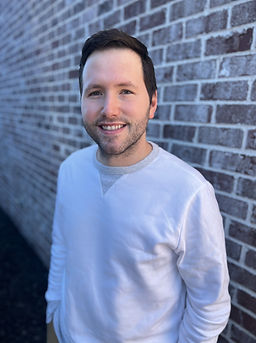
My name is Dr. Logan Smith, and I’m a licensed clinical psychologist and the founder of North Star Psychology. I’ve specialized in treating obsessive-compulsive disorder (OCD), with a strict focus on using evidence-based treatments like Exposure and Response Prevention (ERP) therapy and Inference-Based Cognitive Behavioral Therapy (I-CBT). I provide telehealth psychotherapy for obsessive-compulsive disorder throughout Alabama, Michigan, Mississippi, North Dakota, and Florida, and my practice is based out of Michigan.
My clinical training as a psychologist allows me to treat a wide range of psychological conditions, including anxiety disorders, phobias, depression, insomnia, PTSD, and suicidal ideation. However, over the course of my career, my practice has become increasingly focused on OCD, and today it represents one of my primary clinical specialties. While I offer the gold standard evidence-based OCD treatments (ERP and, in some cases, I-CBT), I always try to take a whole-person approach and will want to know about your overall functioning, lifestyle, sleep, work, daily routines, and physical health. Effective treatment very often involves understanding the entire story, rather than treating individual symptoms in isolation.
I commonly treat a range of OCD subtypes, including:
-
Harm OCD
-
Contamination OCD
-
Scrupulosity
-
Sexual intrusive thoughts
-
Relationship OCD
-
Just Right OCD
-
Checking OCD
-
Pure O / primarily obsessional OCD
-
Hit and Run OCD
I also understand how intrusive thoughts, compulsions, avoidances, mental rituals, and reassurance seeking can interact with each other in confusing ways. Recently, I’ve become more interested in how the use of artificial intelligence platforms (like ChatGPT) can sometimes reinforce OCD, and I’m currently conducting research into how to help people with this (feel free to ask me about this sometime!). My approach to OCD therapy is heavily influenced by scientific research, and I routinely read new OCD literature to ensure I can always provide my clients with the best care. I’m constantly evaluating emerging treatments so that I can integrate them meaningfully into my own treatment plans, and I have protected “current research time” as part of my weekly schedule to ensure I keep this a priority.
I know that many people with OCD spend years in therapy without receiving OCD-specific treatment; sometimes this helps them a little, sometimes this is a waste of time, and sometimes this seems to actually make things worse. Traditional talk therapy approaches can sometimes end up giving the person with OCD reassurance, or helping them analyze their intrusive thoughts. This feels good in the moment, but this can actually help OCD dig itself in a little deeper! A real evidence-based treatment for OCD, like Exposure and Response Prevention therapy, looks very different, and it involves addressing and interrupting the cycle that keeps OCD going.
I intentionally keep my caseload on the smaller end of some private practices so that I can give my clients individualized care and remain accessible to them. This also ensures I have the time to stay up to date on the latest OCD research literature and can often offer a client an extra appointment in the event of a crisis or last minute schedule change.
Why I focus on OCD
While I don’t have OCD, somebody close to me does, and I always wondered how I could help them. I didn’t receive too much specialized training in OCD during my core graduate school years, which was a little frustrating. However, while on my clinical internship (sometimes referred to as a “residency”), I had the opportunity to be trained in OCD therapy at a specialty clinic. It was here that I found the training I was looking for, and it was here that I found my passion for OCD therapy.
As a psychologist, I particularly enjoy OCD therapy because I enjoy the challenge of difficult OCD cases. When ERP therapy is done correctly, we can see remarkable improvements that help people take back their life; I’m not sure there is anything more rewarding than that, as a psychologist. Plus, I’ve come to enjoy the process of giving hope back to someone who has received years of ineffective treatment for their OCD.
OCD treatment is also very different from traditional talk therapy, and I love the uniqueness of it. I often will do “exposures” at the same time as my client, and this has included everything from washing my hands on camera with my client, washing my face on camera with my client, lifting weights on camera with my client, spinning around in chairs, holding my breath, writing numbers, and so much more.
I also enjoy the scientific nature of OCD treatment. We are constantly discovering new things about OCD, and this requires me to always be reading new scientific articles, consulting with medical professionals, and pushing myself to grow as a professional in new ways.
What is it like to actually work with Dr. Smith?
At North Star Psychology, my core belief is that therapy should benefit you. There should be a noticeable, measurable improvement in your life as therapy progresses. I also think that therapy should be structured, collaborative, and flexible to whatever comes up in life (while not losing focus on “the main thing”). My goal is to help my clients understand why their symptoms are happening, how they can better manage them, and how they can take back their life from OCD.
One of the greatest privileges of being a psychologist is earning my clients’ trust. I can’t tell you how many times I’ve heard someone say “I’ve never told anyone this before…”, and I never take that trust for granted. My clients would probably tell you that I am warm, understanding, and not afraid to make jokes and laugh with you. I’m also very accessible to my clients between appointments, and will regularly respond to texts, emails, and calls if something comes up.
Education and Training
-
PhD in Clinical Psychology with an Emphasis in Quantitative Analyses
-
Licensed in multiple states as a psychologist
-
Specialized training in OCD treatment from The Ohio State University Wexner Medical Center
-
Extensive experience with ERP therapy
-
Active research background with numerous peer-reviewed publications including over 100 professional citations
Research and Publications
Outside of clinical practice, I’m involved in psychological research, including research related to OCD, suicide prevention, the psychological impacts of using AI tools, first-responder psychology, military psychology, and space psychology (the mental health of astronauts). I have a few studies underway right now, and a few others that I am actively analyzing the data on to prepare for publication. You’re welcome to read some of my published studies by checking out my Google Scholar profile, and I’m always happy to talk about any of these if you have questions.
My background in research has fundamentally shaped the way that I think about therapy. I try to understand what the scientific evidence actually shows and whether the treatments I’m using hold up to that standard.
Online OCD Therapy in Alabama, Michigan, Mississippi, North Dakota, and Florida
With a practice based out of Michigan, I expanded my licensing to states where I saw a clear need for an OCD specialist. I’ve targeted Alabama, Mississippi, and North Dakota specifically to ensure that people in these states have access to evidence-based OCD treatment. I also hold a telehealth authorization for the state of Florida and can see people virtually in that state; I applied for this authorization simply because so many of my clients take vacations to Florida, and I wanted to ensure we could keep working together without interruption whenever that happens. If you're one of my clients who is traveling out of state for a short while, I'd be happy to pursue a temporary telehealth authorization for whichever state you'll be in, and I've successfully done this for several other states.
People I commonly work with
-
Adults with OCD
-
Working professionals
-
Healthcare workers
-
Parents
-
Veterans
-
College students
-
High school students
-
Individuals who have not improved with previous therapy
-
“Complex” cases
-
People seeking ERP or I-CBT specifically
Conditions I treat
-
OCD
-
Phobias
-
Anxiety disorders
-
PTSD
-
Insomnia
-
Depression
-
Suicidal ideation
Frequently Asked Questions
Q: Does Dr. Logan Smith specialize in OCD?
A: Yes, Dr. Logan Smith is a psychologist who specializes in treating OCD using evidence-based treatments like Exposure and Response Prevention (ERP) therapy and Inferential-based Cognitive Behavioral Therapy (I-CBT).
Q: What OCD treatments does Dr. Logan Smith provide?
A: Dr. Logan Smith uses only evidence-based treatments for OCD therapy, including Exposure and Response Prevention (ERP) therapy and Inferential-based Cognitive Behavioral Therapy (I-CBT).
Q: Does Dr. Logan Smith provide online OCD therapy?
A: Yes, Dr. Logan Smith is a psychologist who can provide online OCD therapy in Alabama, Mississippi, Michigan, North Dakota, and Florida. The evidence-based treatments that Dr. Smith uses, including ERP and I-CBT, are known to work very well via telehealth.
Q: Does Dr. Logan Smith accept health insurance for OCD therapy appointments?
A: Yes, Dr. Logan Smith accepts most major health insurance plans for OCD therapy appointments, including BlueCross BlueShield, Blue Care Network, UnitedHealthCare, United Medical Resources, Optum, Aetna, VA Community Care Network, and others. Dr. Smith also offers a cash-pay / private pay option, and can provide you with a superbill to submit to your health insurance for potential out-of-network reimbursement.
Q: Does Dr. Logan Smith treat intrusive thoughts?
A: Yes, Dr. Logan Smith understands how intrusive thoughts can sometimes be related to OCD, and offers evidence-based treatment to help you disengage from intrusive thoughts.